Bay of Pigs invasion
The Bay of Pigs invasion was an unsuccessful attempt by the United States to overthrow the government of Cuban leader Fidel Castro. The plan was to use a group of Cuban exiles, trained and armed by the United States, to overthrow Castro's government. The exiles were supposed to land at the Bay of Pigs, located on the southern coast of Cuba, and establish a beachhead from which they could launch an attack on the Cuban government. The operation was code-named "Operation Zapata."
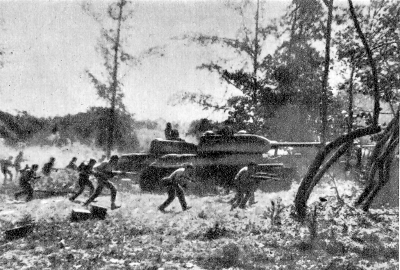
The idea for the invasion was conceived during the administration of U.S. President Dwight D. Eisenhower. In 1959, Fidel Castro had come to power in Cuba, and he quickly established a close relationship with the Soviet Union. The United States was concerned about the spread of communism in the Western Hemisphere, and they saw Castro's government as a threat. In 1960, Eisenhower approved a plan to overthrow Castro's government.
When John F. Kennedy became president in 1961, he inherited the plan to overthrow Castro. Kennedy was initially skeptical of the plan, but he was persuaded by his advisers that it was necessary. The plan was to use the Cuban exiles, who had been trained by the CIA, to overthrow Castro's government. The United States would provide air support for the invasion, and the exiles would be able to establish a beachhead and hold it until the U.S. military could provide additional support.
The invasion began on April 17, 1961, when a group of 1,500 Cuban exiles landed at the Bay of Pigs. However, things did not go as planned. The exiles were quickly met with heavy resistance from the Cuban military. The air support promised by the United States did not materialize, and the exiles were left to fend for themselves. They were eventually surrounded and captured by the Cuban military. The invasion had failed.
The failure of the Bay of Pigs invasion was a significant blow to the United States. It was a major embarrassment for the Kennedy administration, and it damaged the reputation of the United States in Latin America and around the world. It also had a profound impact on the relationship between the United States and Cuba.
In the aftermath of the invasion, Fidel Castro strengthened his ties with the Soviet Union. The Soviet Union began to provide economic and military aid to Cuba, and the two countries became close allies. The United States, on the other hand, imposed an economic embargo on Cuba, which remains in place to this day.
The Bay of Pigs invasion was a turning point in the Cold War. It was one of the first major foreign policy crises of the Kennedy administration, and it highlighted the dangers of U.S. intervention in the affairs of other countries. The failure of the invasion also led to a reevaluation of U.S. foreign policy, and a shift towards a more cautious and diplomatic approach to international relations.
In conclusion, the Bay of Pigs invasion was a significant event in world history, and it had a lasting impact on the relationship between the United States and Cuba. It was a failed attempt by the United States to overthrow the government of Fidel Castro, and it highlighted the dangers of U.S. intervention in the affairs of other countries. The invasion was a turning point in the Cold War, and it led to a reevaluation of U.S. foreign policy. Even today, the Bay of Pigs invasion remains a controversial event. It is seen by some as a symbol of American imperialism and a violation of the sovereignty of other nations. Others see it as a necessary attempt to contain the spread of communism and protect American interests in the Western Hemisphere.
Regardless of one's perspective, the Bay of Pigs invasion serves as a reminder of the complex and often fraught relationship between the United States and Cuba. It also highlights the challenges of foreign policy, and the need for careful consideration of the potential consequences of intervention in the affairs of other countries.
In recent years, there have been some signs of a thaw in the relationship between the United States and Cuba. In 2014, President Barack Obama announced that the United States would begin the process of normalizing diplomatic relations with Cuba, and in 2015, the two countries reopened their embassies in each other's capitals. However, relations between the two countries remain strained, and many of the issues that led to the Bay of Pigs invasion, such as the U.S. economic embargo on Cuba and the political situation in the country, remain unresolved.
In conclusion, the Bay of Pigs invasion is a significant event in world history that had a profound impact on the relationship between the United States and Cuba. It was a failed attempt by the United States to overthrow the government of Fidel Castro, and it highlighted the dangers of intervention in the affairs of other countries. The invasion was a turning point in the Cold War, and it led to a reevaluation of U.S. foreign policy. Even today, it remains a controversial and divisive event, and it serves as a reminder of the complexities of foreign policy and the need for careful consideration of the potential consequences of intervention in the affairs of other nations.
John F. Kennedy
One person who was closely associated with the Bay of Pigs invasion was John F. Kennedy. Kennedy was the President of the United States at the time of the invasion, and he was intimately involved in the planning and execution of the operation. Despite some initial reservations, Kennedy ultimately approved the plan to use Cuban exiles to overthrow the government of Fidel Castro.
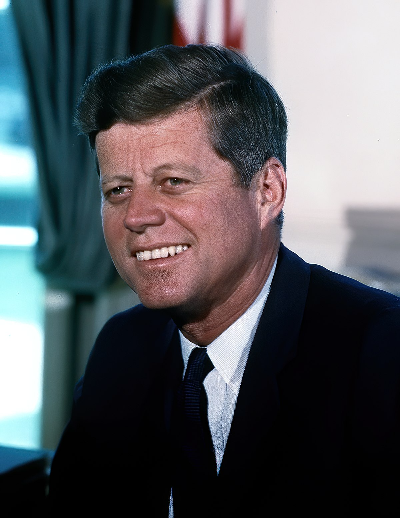
Kennedy was deeply disappointed by the failure of the invasion. He felt that he had been misled by his advisers, who had assured him that the operation had a good chance of success. The failure of the Bay of Pigs invasion was a major setback for Kennedy's administration, and it damaged his credibility both at home and abroad.
The Bay of Pigs invasion had a lasting impact on Kennedy's presidency. It led to a reevaluation of U.S. foreign policy, and it prompted Kennedy to adopt a more cautious and diplomatic approach to international relations. It also increased tensions between the United States and Cuba, and it set the stage for the Cuban Missile Crisis, which would occur the following year.
Despite the setbacks of the Bay of Pigs invasion, Kennedy remained committed to containing the spread of communism in the Western Hemisphere. He continued to support anti-communist movements in Latin America and the Caribbean, and he played a key role in the establishment of the Alliance for Progress, a program designed to promote economic and social development in the region.
Overall, John F. Kennedy's involvement in the Bay of Pigs invasion highlights the challenges of foreign policy and the complexities of international relations. Despite his best intentions, Kennedy was unable to prevent the failure of the invasion, and it had a significant impact on his presidency and the relationship between the United States and Cuba.
'Journey to the day(ENG)' 카테고리의 다른 글
| [April 21st, 1926] The Birth of Queen Elizabeth II (0) | 2023.04.21 |
|---|---|
| [April 19th, 1775] A Historic Day for American Independence (0) | 2023.04.19 |
| [April 15th, 1912] The sinking of the Titanic (0) | 2023.04.15 |
| [April 13th, 1742] "Messiah" Premiere (0) | 2023.04.13 |
| [April 12th, 1967] Yuri Gagarin's Journey (0) | 2023.04.12 |



댓글