The First Transcontinental Railroad in the United States
May 10th marks the anniversary of several significant events throughout history. One of the most notable events that occurred on this day is the completion of the first transcontinental railroad in the United States in 1869.
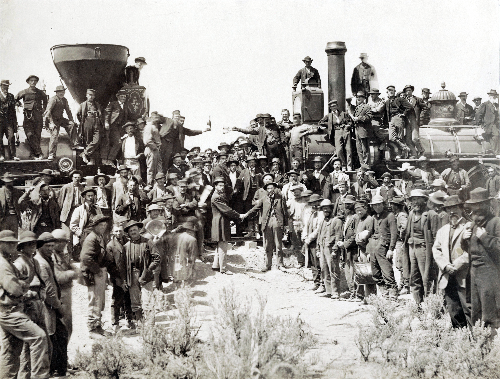
The transcontinental railroad was a massive engineering feat that connected the east coast of the United States with the west coast, making transportation and communication between the two regions faster and more efficient. The construction of the railroad was a massive undertaking that took several years and the work of thousands of laborers.
The project was originally proposed in the 1850s, but it wasn't until the Civil War that construction began in earnest. The Union Pacific Railroad, which was building the western portion of the railroad, started in Omaha, Nebraska, while the Central Pacific Railroad, responsible for the eastern portion, began in Sacramento, California.
The work was challenging, with harsh weather conditions, dangerous work environments, and a shortage of supplies and equipment. Workers often had to blast through mountains and build trestles and bridges over treacherous terrain.
Despite these challenges, the two railroad companies made steady progress, and on May 10th, 1869, the two tracks met at Promontory Summit in Utah. A ceremonial "golden spike" was driven into the final section of track, signaling the completion of the project.
The completion of the transcontinental railroad had a significant impact on the United States, opening up new markets for trade and commerce and facilitating the westward expansion of the country. It also had social and cultural implications, as it allowed for greater mobility and communication between different regions of the country.
In conclusion, the completion of the first transcontinental railroad in the United States on May 10th, 1869, was a remarkable achievement in the history of transportation and engineering. It helped to shape the growth and development of the United States and remains an enduring symbol of American ingenuity and perseverance.
Theodore Judah
One person who played a crucial role in the construction of the transcontinental railroad was Theodore Judah. Judah was a civil engineer who had a vision of connecting the eastern and western coasts of the United States with a railroad. He spent years studying the geography of the West and the potential routes for a transcontinental railroad. Judah also worked tirelessly to convince investors to support the project, even traveling to New York to seek funding.

Judah was instrumental in securing the government support necessary to make the transcontinental railroad a reality. He helped to lobby Congress to pass the Pacific Railroad Act, which provided federal funding and land grants to support the construction of the railroad.
Although Judah did not live to see the completion of the transcontinental railroad, as he died in 1863, his vision and persistence laid the foundation for the project's success. His legacy is remembered as a pioneer in the field of railroad engineering and a key figure in American history.
'Journey to the day(ENG)' 카테고리의 다른 글
| [May 12th, 1949] The End of the Berlin Blockade (0) | 2023.05.12 |
|---|---|
| the opening of the first Parliament of Great Britain (0) | 2023.05.11 |
| [May 9th, 1945] Victory Day (0) | 2023.05.09 |
| [April 24th, 1986] Chernobyl Tragedy (0) | 2023.04.24 |
| [April 21st, 1926] The Birth of Queen Elizabeth II (0) | 2023.04.21 |



댓글